
Troup County Criminal History Checks
Troup County criminal records live with several custodians. Superior Court handles felony files, State Court handles misdemeanor matters, and municipal courts keep city ordinance and traffic cases. Magistrate Court issues warrants and creates first-appearance records, but it does not decide felony guilt. The arresting agency owns its report, Troup County Jail owns the booking layer, and the Georgia Crime Information Center, or GCIC, maintains the fingerprint-linked state history.
Start with a full legal name, spelling variants, the likely court, an approximate year, and a case, incident, or booking number if known. A date of birth can help distinguish common names when an official source lawfully displays or accepts it. Then use each source for the claim it can prove.
- Identify whether the matter began with the sheriff, a city police department, or another agency.
- Use the Georgia E-Access directory to find the participating court and provider; an account is required.
- Call the Clerk of Superior and State Courts when the provider omits a file, document image, or disposition.
- Send older files to Troup County Archives only after obtaining the court and case number.
- Confirm recent custody with the jail and state custody with GDC, then use a local law-enforcement or GCIC channel for an official Georgia history.
Four Troup Criminal Record Custodians
A booking, court file, GCIC history, and correctional locator answer different questions. The booking sheet records intake and booked allegations. The clerk's file shows what prosecutors filed and what the court did. GCIC joins fingerprint-linked arrest cycles to reported outcomes. GDC Find an Offender concerns the state correctional population, not every person held in the county jail.
Official Background Checks in Georgia
Georgia does not provide a single unrestricted public GCIC name-search website. For self-review, the Georgia Bureau of Investigation says most Georgia sheriffs and police departments can provide Georgia criminal-history information under their own identification, consent, and fee procedures. GCIC also offers record inspection and fingerprint services by advance appointment at its Decatur lobby. Call 404-244-2639, option 1; same-day appointments are not offered.
GAPS, administered by Fieldprint, handles fingerprint checks authorized under Georgia law. Registration requires the program or agency code tied to the authorized purpose, followed by an appointment and accepted identification. The result goes to the authorized agency. For a person's own national Identity History Summary, the FBI EDO route requires fingerprints and the fee shown by the FBI at checkout. Neither product replaces a certified Troup County court judgment.
Troup Criminal Files Around Ridley Avenue
The Troup County Government Center at 100 Ridley Avenue in LaGrange houses the Clerk of Superior and State Courts and court-service offices. The main county number is 706-883-1610, and published hours are weekdays from 8:00 a.m. to 5:00 p.m. LaGrange Municipal Court is nearby at 208 Ridley Avenue. That cluster makes follow-up practical, but it does not place every local record under one roof.
Troup County Archives keeps Superior Court criminal cases from the early 1800s through 1995, State Court criminal cases from 1989 through 2010, and LaGrange Municipal Court files from 2009 through 2019. Archives needs a case number for county court material, often in a form such as 95-R-1234 or 10-S-1234. For a municipal file, obtain the defendant name and disposition date first. Search with the live custodian, then ask Archives to retrieve the indexed file.
Kinds of Troup County Criminal Records
A record's title points to its creator and its limits. An incident report describes a reported event and investigation. Jail intake adds custody facts. A prosecutor's accusation or indictment sets out a filed charge, which may differ from the booking label. A judgment supplies the outcome. Public access can also differ by document because active investigations, juvenile matters, victim details, medical information, and restricted files receive special treatment.
- Arrest and booking records record the event, intake, booked charge, bond, holds, and release or transfer.
- Court case files contain pleadings, hearings, docket entries, judgments, sentences, and financial entries.
- GCIC histories connect fingerprint-based arrest information to outcomes reported by courts and agencies.
- Warrant records begin in Magistrate Court or, for missed city court dates, may arise in a municipal court.
- Supervision and registry records reflect distinct probation, parole, correctional, or sex-offender systems.
Troup Arrest Search Without a Roster
No stable official public Troup County jail roster was verified. The sound fallback is direct jail confirmation, not an unofficial mugshot directory. Call Troup County Jail at 706-883-1729 with a full name, lawful date-of-birth information, an approximate arrest date, or a booking number. Ask about current custody, release or transfer, booked charges, bond, and the arresting agency.
For a document, contact the sheriff through its official site and ask whether Professional Standards/Open Records or the jail custodian handles the request. Specify the booking sheet, charge and bond data, release date, or incident report instead of asking for every record about a person. After a transfer to state custody, switch to GDC Find an Offender. A county booking may remain even when the person is no longer at the jail.
Troup County Criminal Records: What They Contain
The fields depend on the source. GBI describes a Georgia criminal history as identification data, arresting agency, arrest date and charges, final judicial dispositions that were reported, and Georgia correctional custody information when present. A clerk file uses a court and case number rather than an arrest cycle. Public copies should not expose protected personal identifiers.
| Name & Identifiers | Names and aliases, birth data, physical descriptors, and internal identity numbers where lawfully shown. |
|---|---|
| Arrest / Booking Data | Agency, dates, booking number, booked allegations, bond, holds, and release or transfer. |
| Charges & Statutes | The alleged or filed offense, Georgia code reference, and felony or misdemeanor level. |
| Disposition | Dismissal, nolle prosequi, acquittal, plea, conviction, dead docket, no bill, or another outcome by charge. |
| Sentence | Confinement, probation, fines, costs, restitution, or other terms ordered by the court. |
| Custody / Supervision Status | County release or transfer facts, state correctional status, or the public part of a supervision judgment. |
Troup County Open Records Portal
For material held by county administration, the Troup County Open Records page provides a trackable portal. Valerie West is the designated Open Records Officer, with Caroline Johnson as alternate. The county sends messages and cost estimates to the requester's email and states that it will respond within three business days about whether responsive records exist and are open. That period is an acknowledgment deadline, not a promise that all production will finish in three days.
| Requester details | Name, address, and working contact information for delivery and notices. |
|---|---|
| Access choice | Inspect and copy the material, or obtain copies. |
| Record description | Agency, record type, names, dates, and an incident, booking, or case number. |
| Tracking | The online submission creates a trackable request and uses email for updates. |
| Certification | The PDF route includes signature and date fields. |
The county bills search, retrieval, copying, redaction, or supervised-inspection labor at the hourly rate of the lowest-paid qualified full-time employee. The first 15 minutes of labor are free. The current page says cash or check, in person or by mail, is temporarily the only way to pay open-records costs. Sheriff, police, and court records may require a direct request to their own custodians.
Georgia Public Access Laws
Georgia law separates ordinary agency records, court files, repository histories, restricted arrests, and registry information. The practical rule in Troup County is to ask the creator or legal custodian and to request the public portion with enough detail to find it. An office may redact protected content while releasing the rest, and it should identify the legal basis for withholding material.
Key Statutes:
O.C.G.A. §50-18-71 sets inspection and copy procedures, response duties, and allowed charges.
O.C.G.A. §§35-3-34 and 35-3-35 govern dissemination of Georgia criminal-history information.
O.C.G.A. §35-3-37 controls record restriction and its effect on public access.
O.C.G.A. §42-1-12 governs registration information and sheriff and GBI duties.
Troup Arrest Records in the First 72 Hours
Troup Magistrate Court conducts jailed first appearances by video on Monday, Wednesday, and Friday mornings, ordinarily within 48 to 72 hours after arrest. The court addresses counsel, probable cause or bail, conditions, and the scheduling of a committal hearing. A prosecutor then decides what charge will proceed. Felonies move toward Superior Court, misdemeanors generally move to State Court, and some city matters stay in municipal court.
This staggered flow explains a common gap. The jail may have a booked allegation before the clerk has a State or Superior Court case number. The final filed charge can be amended, reduced, dismissed, or never filed. Check the booking to learn what happened at intake, then check the correct trial court for the legal outcome. An arrest is not proof of guilt.
Restricted, Sealed & Expunged Records
Georgia calls its main remedy record restriction, often informally called expungement. Restriction limits ordinary public dissemination but does not destroy the record or erase access for judicial and criminal-justice officials. Qualifying outcomes may include dismissals, no-further-action decisions, nolle prosequi, no bill, dead docket, and other nonconviction paths. A guilty disposition usually does not fit the basic nonconviction route, while first-offender and other statutory remedies need case-specific review.
For an arrest before July 1, 2013, begin Section 1 of the state request form with the arresting agency. For an arrest on or after that date, contact the proper prosecutor. Local agency or prosecutor processing may cost up to $50, and GCIC may have a separate current processing fee. Georgia reports that complete GCIC submissions usually take two to three weeks. A denial may be appealed to Superior Court within 30 days. Court sealing and GCIC restriction are related but separate, so recheck both sources.
Troup Mental Health Court Records
Troup County's Mental Health Court is a named accountability program involving judges, prosecutors, defense counsel, probation, and treatment providers. The county says misdemeanor participation lasts at least 12 months and felony participation at least 18 months. The program is free, requires a qualifying Troup residence, charge, or probation link and a serious persistent mental illness related to the charge, and excludes specified serious offenses under O.C.G.A. §15-1-16(b)(3).
The program holds review sessions twice each month and requires random drug screens at least twice weekly. Its existence matters when reading a docket because a court case may include program-related hearings, supervision steps, or later disposition entries that a booking sheet cannot explain. The county program contact is Jasmine Johnson at 706-883-2165 or jajohnson@troupcountyga.gov.
City-by-City Criminal Records in Troup County
LaGrange, West Point, and Hogansville each maintain local police or municipal court channels. A city report starts with the police department that wrote it, while the municipal clerk handles the city case or disposition. County-level charges can then move through Troup County Jail, Magistrate Court, State Court, or Superior Court.
LaGrange Record Check
30,858 in 2020 · Police records start with LPD; current municipal files stay at 208 Ridley Avenue.
West Point Record Check
3,719 in 2020 · Police requests begin with the City Clerk, and county jurisdiction must be confirmed.
Hogansville Record Check
3,267 in 2020 · Police reports go to HPD; court dispositions go to the municipal clerk.
Fixing a Troup Criminal Disposition Gap
A GCIC arrest cycle can look unresolved after a court has acted if the final disposition has not reached the state repository. Compare the GCIC entry with the clerk's judgment or certified disposition. If the state entry is missing or wrong, contact the court that decided the charge and ask about transmitting the correction. Keep the completion letter and inspect the GCIC product again.
The reverse check also matters. A court search can show a filed case without providing the full fingerprint-linked Georgia history, and a booking record may remain even if the charge ended without conviction. Use the clerk for the case result, GCIC for the state history, and the agency or jail for the event and custody records. Do not treat any one layer as a substitute for all three.
Official Sources Behind Troup Record Access
The official Troup County site provides the government directory shown here.
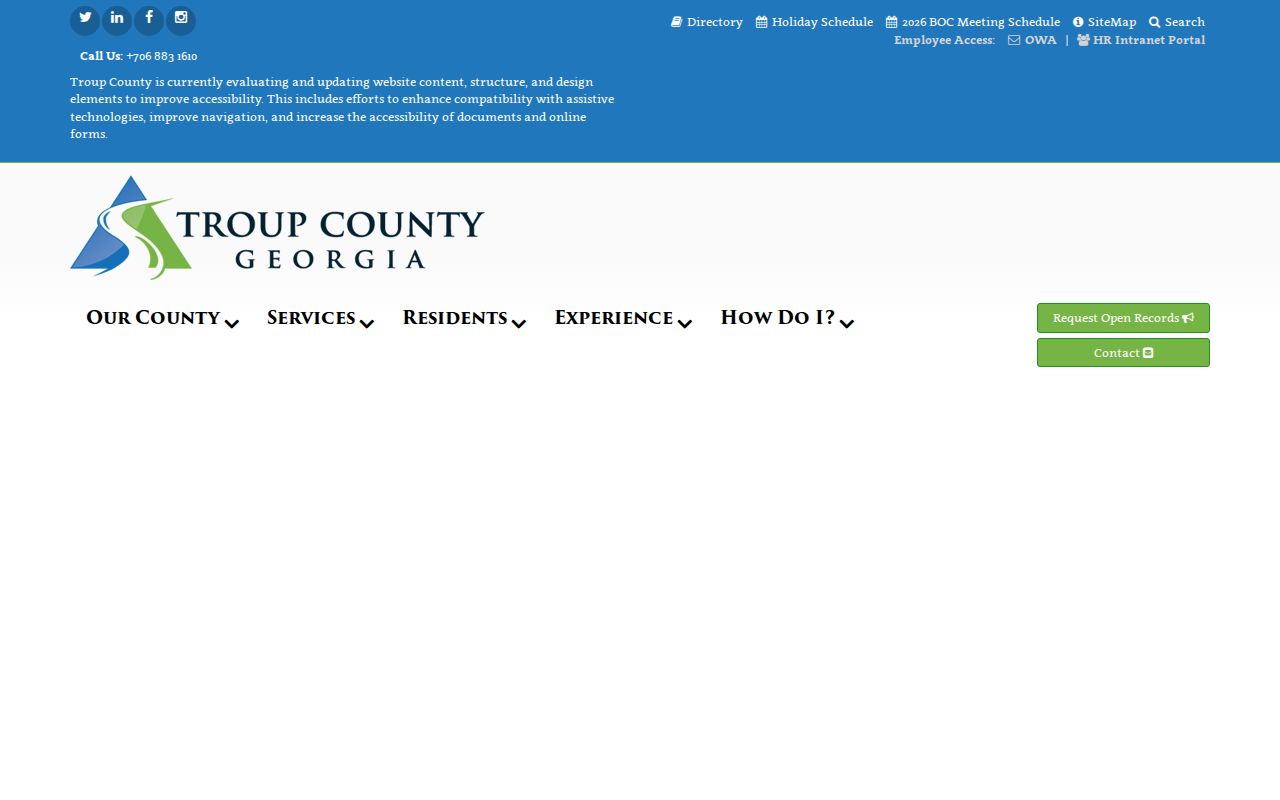
The directory is the starting point for the clerk, court services, and county open-records offices.
The Georgia Crime Information Center explains the state repository services pictured below.
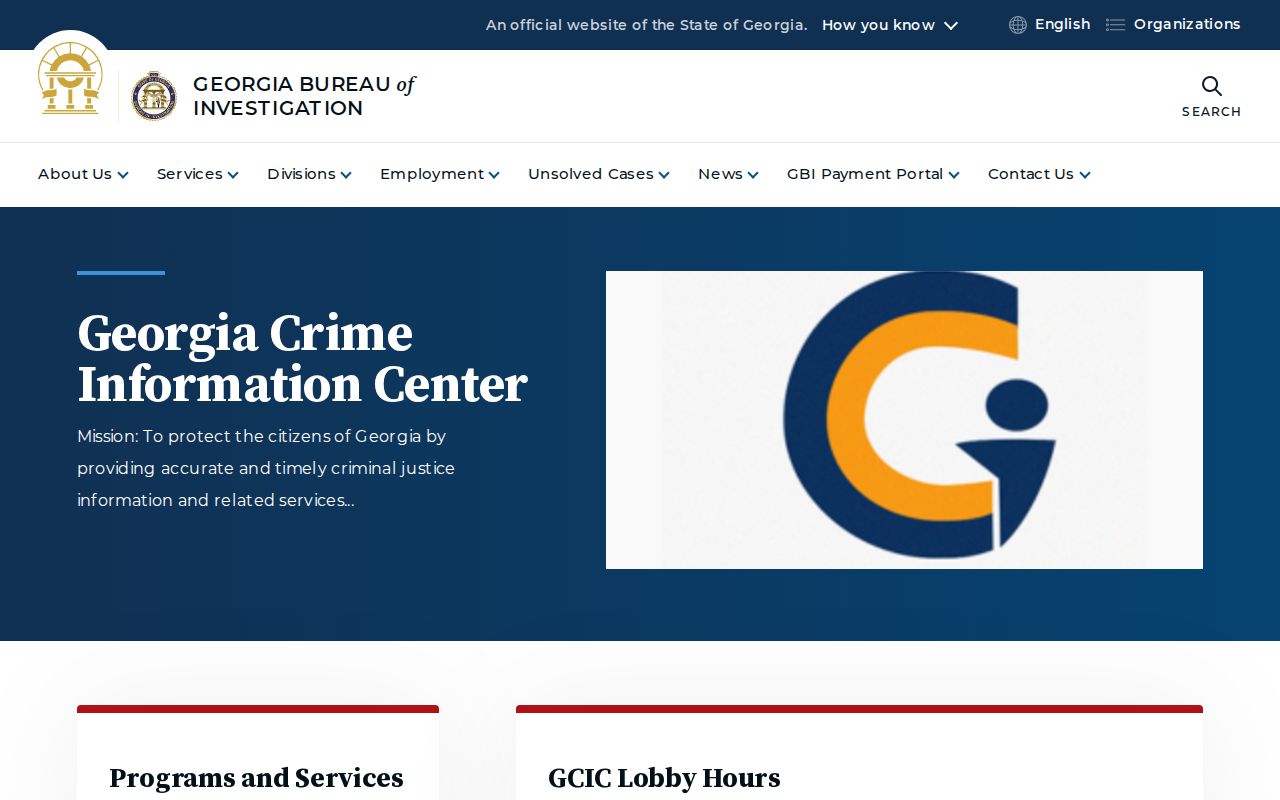
GCIC is the state layer, while local courts and agencies remain the custodians of their own source files.
The GBI criminal-history FAQ sets out Georgia access and correction routes.
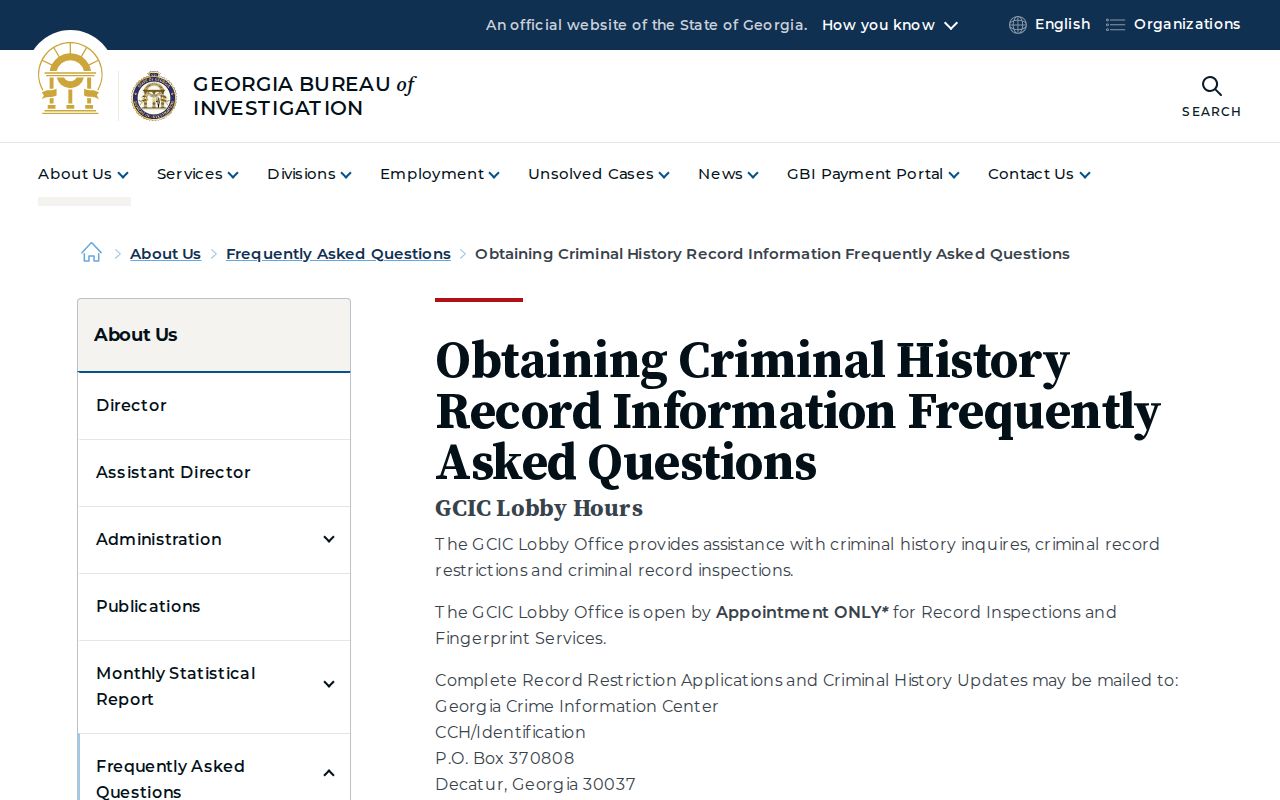
Its channel guidance helps readers avoid mistaking a public court search for an official state history.
The GAPS Fieldprint site is the registration route for authorized fingerprint appointments.
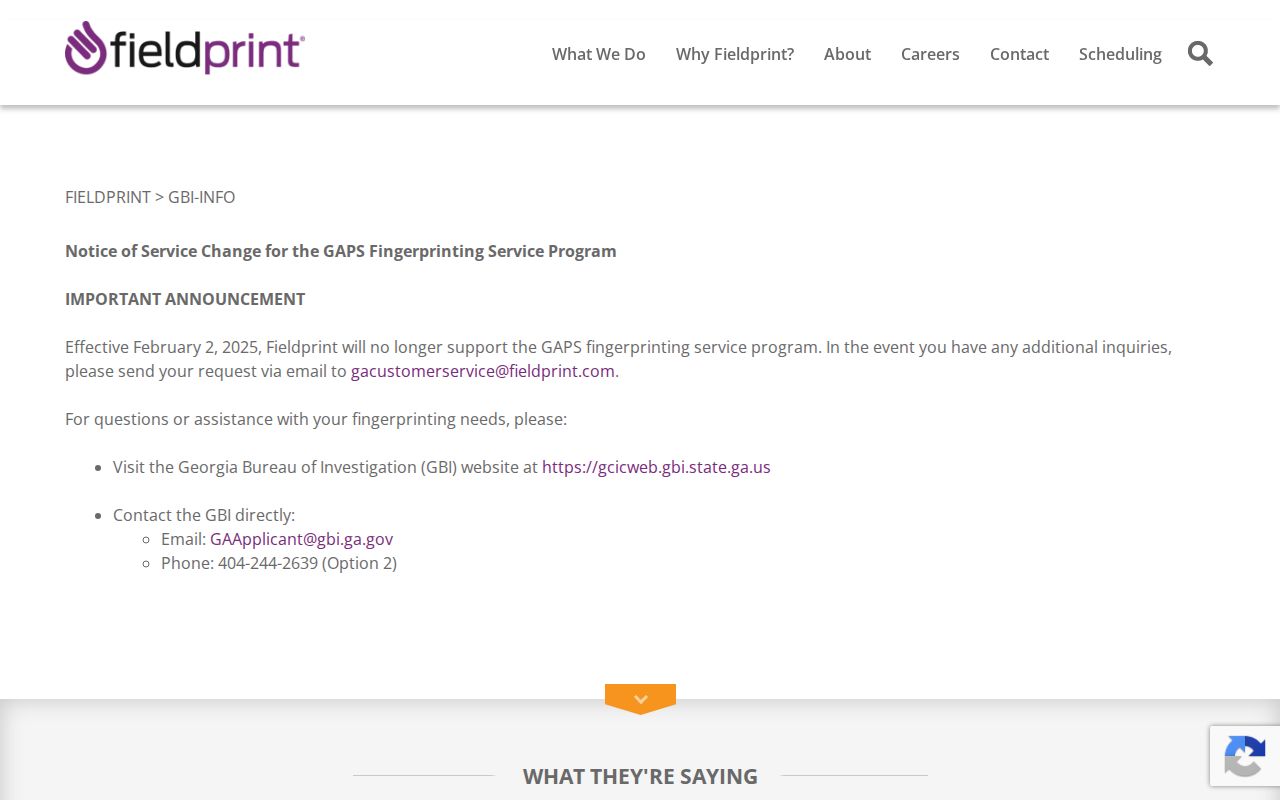
GAPS results follow the authorized program route and are not an unrestricted public people search.
The Georgia Attorney General's open-government guidance supplies the public-access context shown here.
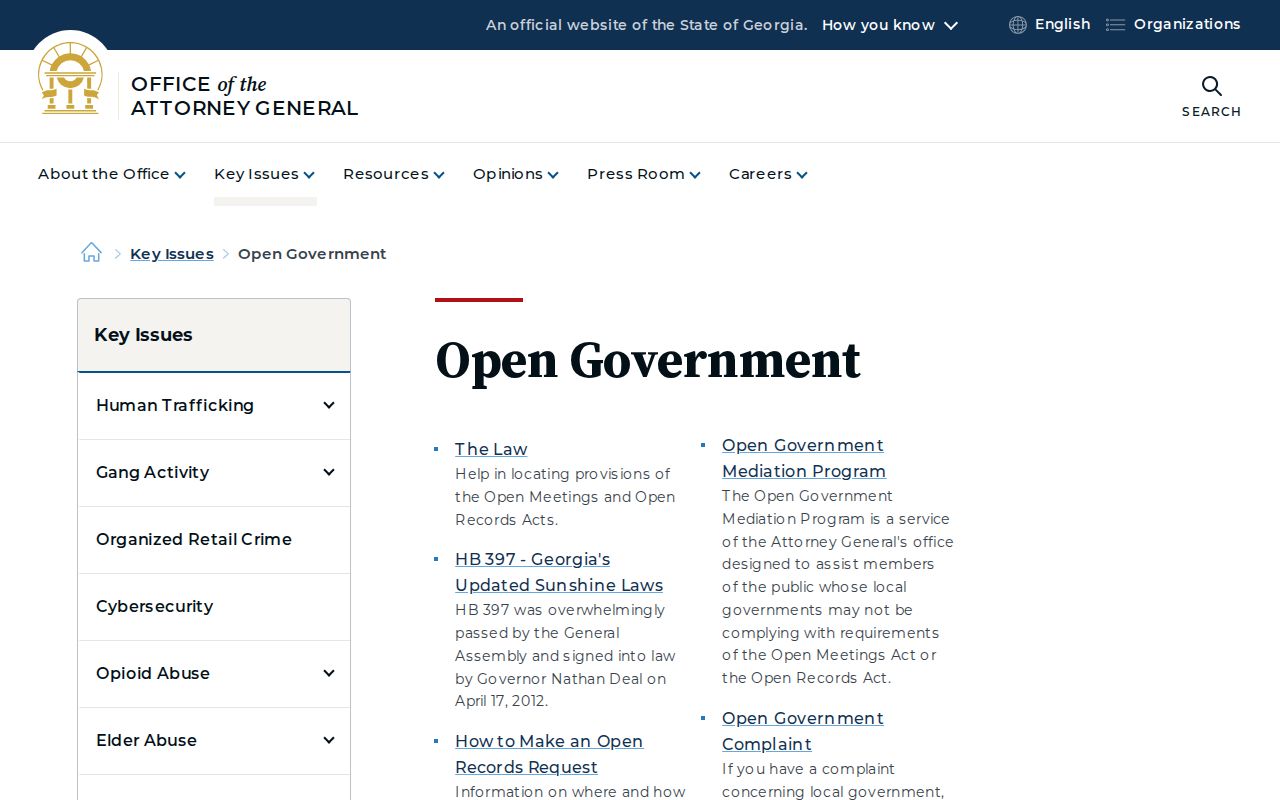
That guidance supports narrow, custodian-specific requests under the Georgia Open Records Act.